
Record, Monitor and Support The Physical Wellbeing of Every Student
Make health and fitness a priority at your school. Athena FitnessMark empowers students to take control of their fitness while providing PE teachers with next-level insight and fitness tracking.
Our Range of Solutions Are Used by
and 400+ More Secondary Schools
Track Each Student’s Physical Performance Over Time
Store and monitor each student’s health and performance-related physical fitness throughout their entire time at school:
- Record the results of a battery of up to 11 fitness tests and track progress over time.
- Store information in a fully compliant, cloud-based platform.
- Build a detailed fitness profile for each student.
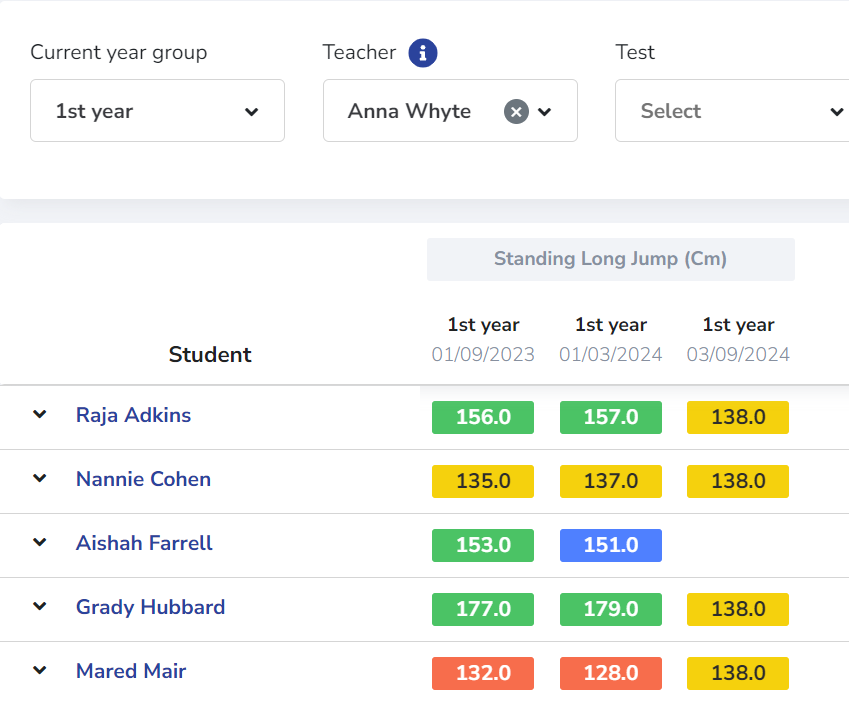
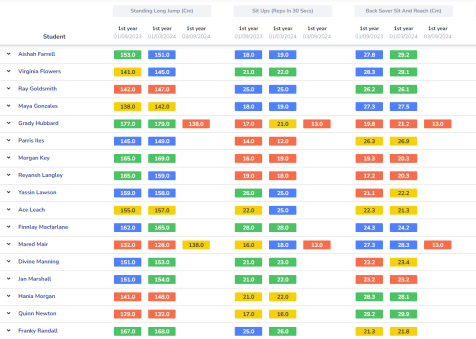
- Monitor a colour-coded dashboard which ranks a student’s performance vs their class, year and national database.
Empower Students to Take Ownership of Their Fitness
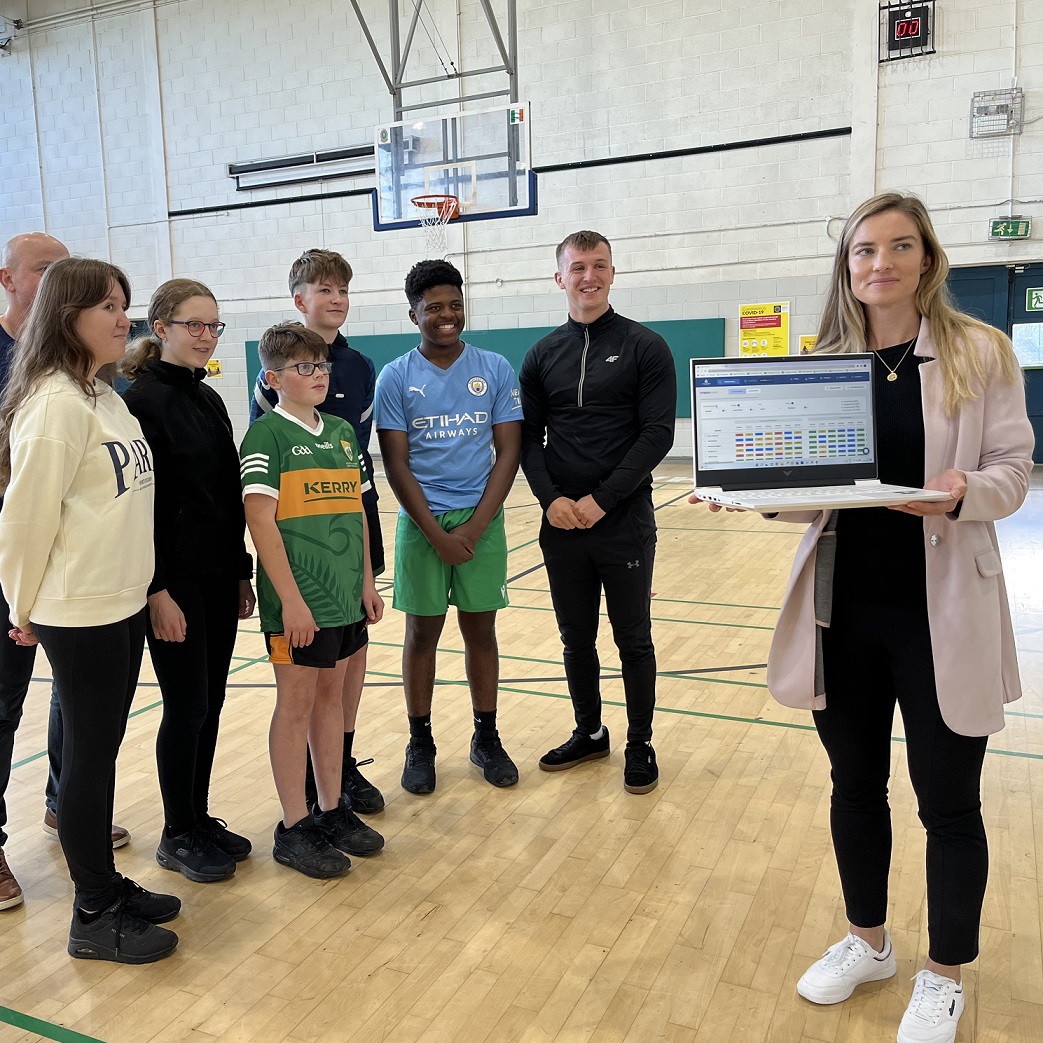
Use FitnessMark to educate students on the different areas of fitness, providing them with the tools they need to live an active and healthy life. Sharing individualised fitness profiles and reports with students, highlighting their strengths and areas in need of improvement can be a huge motivator for students.
Athena FitnessMark Tests
Tests are based on guidelines from the Department of Education
20m Shuttle Run
This 20m shuttle run measures student’s cardio respiratory endurance.
Cardiorespiratory endurance, also known as aerobic endurance, is the body’s ability to sustain a moderate-to-high intensity exercise for a long duration.
Examples of how you use this area of fitness in daily life or sport:
- Jogging.
- Hiking.
- Swimming.
- Cycling.
- Sports that last for a sustained period of time such as soccer and tennis.
Standing Long Jump
From a stationary starting position, students jump as far as they can to get a measure of the muscular strength of their lower body.
Muscular Strength can be described as the maximal force that a muscle or group of muscles can exert in one effort.
Examples of how you use this area of fitness in daily life or sport:
- Lifting a school bag.
- Kicking a ball.
- Lifting in a rugby lineout.
- Executing resistance training exercises.
- A Gaelic football shoulder.
Sit-Up Test
This test measures the number of sit-ups a student can complete in 30 seconds in order to assess the muscular endurance of the student’s abdominal and hip flexor muscles.
Muscular Endurance is the capacity of a muscle or group of muscles to contract repeatedly or remain contracted for a sustained period of time.
Examples of how you use this area of fitness in daily life or sport:
- Walking.
- Running.
- Climbing a staircase.
- Swimming.
- Performing repetitions with weights.
Back Saver Sit and Reach Test
This test measures the flexibility of the student’s lower back and hamstrings.
Flexibility can be described as the range of motion about a joint. It can also be viewed as a joint’s capacity to move freely in a wide range of motion.
Examples of how you use this area of fitness in daily life or sport:
- Tying shoe laces.
- Picking something up off the floor.
- Changing a light bulb.
- Reaching up to catch a ball.
- Swinging leg to kick a ball.
Body Mass Index
This measure uses a student’s height as well as mass to assess their body composition. BMI is often used as a screening tool for health.
Body Composition is the proportion of fat to fat-free mass that a person has on their body. Certain levels of fat are required to carry out bodily functions but excess fat can lead to health issues.
Examples of how you use this area of fitness in daily life or sport:
- Better ability to walk, run and jog as there is less mass on the body.
- Capacity to move quicker in all sports.
- Fitter.
- Jump higher.
- Quicker.
Agility T-Test
Agility is a person’s ability to change the position of their body quickly in response to an external stimulus.
Examples of how you use this area of fitness in daily life or sport:
- Returning a tennis serve.
- Side stepping an opponent in rugby.
- Defending an opponent in Gaelic football.
- Winning a breaking ball in hurling/ camogie.
Stork Balance Test
This test measures a student’s capacity to maintain balance while on their tiptoes on one leg.
Balance is a person’s ability to maintain their equilibrium while moving or stationary
Examples of how you use this area of fitness in daily life or sport:
- Climbing a ladder.
- Cycling.
- Sprinting.
- Sidestepping in invasion sports.
- Dancing.
- Holding gymnastics poses.
- Resistance training.
Ball Wall Toss Test
This test measures the student’s hand-eye coordination.
Coordination is a person’s capacity to use their senses, together with body parts to perform tasks and movements.
Examples of how you use this area of fitness in daily life or sport:
- Driving.
- Walking.
- Tackling in many sports.
- Striking a sliotar.
- Saving a penalty.
- Hitting a golf ball.
20m Sprint Test
This test measures a student’s capacity to run 20m as fast as possible.
Speed is a person’s capacity to cover a set distance as fast as possible.
Examples of how you use this area of fitness in daily life or sport:
- Scoring a try in rugby.
- Running a 100m sprint.
- Chasing back an attacker in soccer.
- Getting to a drop shot in tennis.
- Winning a 50m freestyle swim.
Plate Tapping Test
This test measures a student’s capacity to use upper body reaction time as well as hand-eye quickness to complete a task in as quick a time as possible.
Reaction time is a person’s capacity to respond to something as quickly as possible.
Examples of how you use this area of fitness in daily life or sport:
- Getting out of the way of a moving car.
- Catching a falling cup.
- Winning a breaking ball in football.
- Responding accurately to an opponent’s movements.
- Successfully gathering a grubber kick in rugby.
Vertical Jump Test
This test requires a student to jump as high as they can.
Power is a person’s capacity to perform a maximal effort in as short a time as possible.
Examples of how you use this area of fitness in daily life or sport:
- Getting up a staircase.
- Jumping over a puddle.
- Breaking a tackle in rugby.
- Getting out of a starting block in sprinting.
- Performing jumps and flips in gymnastics.
- Jumping to win a header in soccer
- Completing a successful smash in badminton, tennis or volleyball.
Use Student Fitness Reports When Updating Parents
You can turn student fitness profiles into individual reports which can be shared with parents at parent teacher meetings. Clear, unbiased reports provide the perfect jumping-off point for discussing a student’s fitness level and provides structure to what can be challenging conversations for PE teachers.
Be More Informed When Building Your PE Schedule
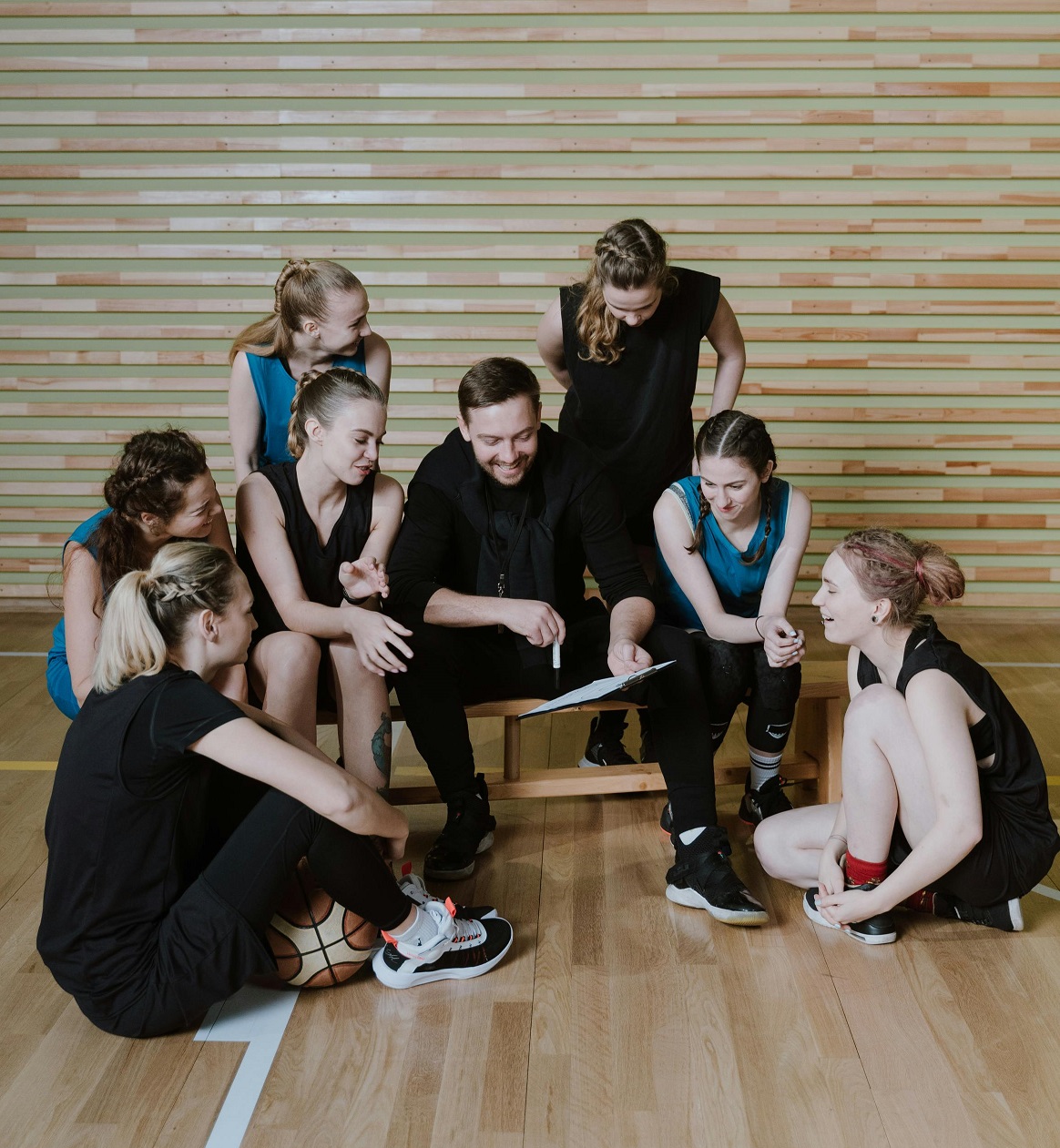
Athena FitnessMark gives you a better understanding of the fitness profile of your class group and the areas they may need to improve upon, allowing you to plan your classes more effectively.
Want to Learn More About Athena FitnessMark? Request a Demo Today.
As Seen In